
Pony World: Dress Up Magic
Kitten Doll StudioRole Playing
3.653.00 Reviews
- Version
- 5.1
- Installs
- 5.00M
- Age Rating
- Everyone
Screenshots


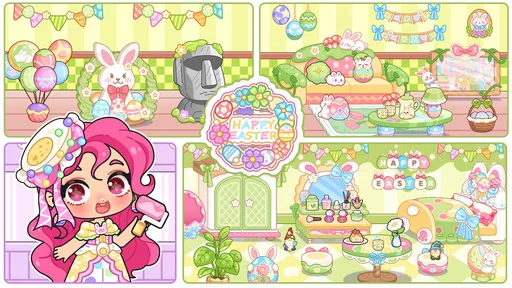



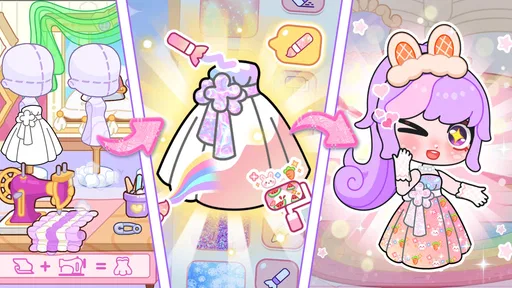

Our Review of Pony World: Dress Up Magic
 Analysis by Appyee
I spent time with Pony World: Dress Up Magic as a light role-playing game built around character creation, pony styling, room decoration, and simple exploration. It is the kind of game I can open without preparing for a long session: I make a character, adjust an outfit, change a room, and wander around until I feel like stopping. That relaxed structure is its biggest appeal.
The game comes from Kitten Doll Studio and is free to play. It is suitable for Everyone, which makes the colorful presentation easy to share with younger players, although I would still suggest that parents check how a child uses any free game. The title was released on February 19, 2025, and the current version is 5.1. It runs on devices using Android 6.0 or later.
What matters most in daily use is that this is not trying to be a demanding adventure epic. I see it more as a creative play space with role-playing touches. If you want fast battles, deep character statistics, or a story that constantly pushes you forward, this will probably feel too gentle. If you enjoy arranging outfits and spaces at your own pace, its simple design makes much more sense.
How Pony World feels during ordinary play
I find ordinary play works best when I give myself a small creative goal instead of expecting the game to supply a constant stream of tasks. A color theme or a character idea can make the choices feel more connected, and it gives me a natural stopping point when I only have a few minutes. From there, the useful question is how to turn that first idea into a satisfying start.
A quick start with a relaxed rhythm
My first impression is that the game is easy to understand because its main activities are immediately recognizable. Creating a character gives me a personal starting point, while pony dress-up provides the most obvious reason to keep experimenting. Decorating rooms adds another layer: instead of treating the environment as a background, I can make it part of the play session.
The pace suits short visits. I can spend a few minutes changing a look, then return later with a different idea for a room. That makes it a useful option for a quiet break, especially when I do not want the pressure of a timer, a difficult stage, or a complicated quest chain. Its free entry also lowers the risk of trying it casually.
There is a trade-off here. A relaxed game can feel limited when I am looking for a clear goal. Pony World gives me activities, but much of the motivation comes from my own creativity rather than from a strong sense of progression. I need to decide what I want to make. Players who prefer games that constantly reward the next action may find the experience less gripping than a conventional role-playing adventure.
What I actually do with the customization
The most satisfying routine is to work in a small cycle: create or adjust a character, choose a pony style that fits the idea, then arrange a room around that look. I find this more enjoyable than treating each feature separately. A bright character looks more deliberate when the room supports the same mood, while a quieter design can benefit from a simpler setting.
That workflow is one of the game’s less obvious strengths. It gives me a reason to revisit earlier choices instead of making a single outfit and moving on. I can use the room as a test space for a character concept, then return to the character when the surroundings reveal that something does not match. For children, this can also become a straightforward way to practice visual choices without the rules of a competitive game.
At the same time, customization only works when I am willing to make my own themes. Someone who does not enjoy comparing colors, clothing, pony appearances, and room arrangements may run out of interest quickly. The game is better understood as a creative toy with role-playing framing than as a traditional quest-driven title.
Exploration without demanding commitment
Exploration gives the game a little more movement than a pure dress-up app. I can leave the room-making screen and look around, which helps the experience feel like a small world rather than a static wardrobe. I like that change of pace after spending time on details, because it lets me see the character in a broader setting.
Still, I would not choose this as my main exploration game. The appeal is the combination of looking, arranging, and imagining, not the challenge of mastering a map. The exploration works best as a bridge between creative tasks. It breaks up customization and gives me a reason to check how a character feels outside the editing screen.
A realistic everyday use case is a child waiting during a family appointment. A short session can begin with a new outfit, move into a room makeover, and end with a little exploration before the device is put away. An adult might use it in the same way as a calming visual hobby after work. In both cases, the game is most successful when the player accepts that the session does not need a dramatic conclusion.
Performance expectations on compatible devices
I would approach the game with moderate expectations rather than assuming that the minimum operating-system requirement guarantees identical performance on every phone or tablet. Android 6.0 support makes the compatibility range broad, but age alone does not tell me how much free storage, memory, or background activity a particular device has available. Those practical differences can affect how comfortable any visually focused game feels.
In normal use, the important question is whether the device remains responsive while I move between character creation, dress-up, rooms, and exploration. These are the moments when I would pay attention to delayed taps, slow screen changes, or a return to the home screen. I would also close demanding apps before playing on an older device, not because Pony World is presented as a high-end game, but because spare resources make creative interfaces easier to use.
The game’s design suggests a lighter workload than a large action role-playing title, but I would not confuse that with a promise of identical speed everywhere. A newer phone should be the safer choice for frequent switching between screens. On an older compatible device, I would keep expectations practical and avoid judging the whole experience from a single busy moment after many apps have been left open.
Where heavier use may reveal friction
The busiest moments are likely to come from repeated customization rather than from combat or complicated strategy. When I rapidly change several visual elements, move around a decorated room, and then continue exploring, I am asking the game to refresh more of its presentation in a short time. That is also when I notice whether the controls feel consistent enough for careful placement and selection.
For me, the best approach is to make changes in deliberate groups. I choose the general character idea first, settle the pony style second, and decorate the room after that. This is not only more creative; it also prevents me from constantly jumping back and forth while trying to remember what I wanted. On a less powerful device, that measured workflow should be more comfortable than making dozens of changes at once.
Longer sessions can also expose ordinary device limitations such as heat, battery use, or reduced responsiveness from other background activity. I would not claim a specific battery drain or temperature result because those depend heavily on the device. My practical advice is simple: if the phone already struggles with several apps open, start a session with those apps closed and leave enough free space for the device to work comfortably.
Another useful habit is to pause before leaving the game. After a creative session, I prefer to finish a room change or outfit adjustment before switching away. That reduces the frustration of wondering whether the last change was registered. It is a small routine, but it matters more in a customization game than in a title where a missed tap can simply be repeated during the next battle.
Stability, interruptions, and recovering from a problem
My view of reliability is tied to how easily I can return to the activity I was doing. A game like this should feel forgiving when a short session is interrupted, because its main appeal is casual use. I would be more concerned if a player had to reconstruct a detailed design every time the app was closed or the device changed tasks.
When something feels slow, I would first separate an app problem from a device problem. I would close other demanding apps, check that the phone is not already under heavy load, and reopen the game. If the issue appears only after a long session, taking a break and restarting is a sensible recovery step. If it happens immediately and repeatedly, I would check that the device meets the Android 6.0 requirement and that the game is updated to version 5.1.
I also recommend making important creative changes in manageable stages. Instead of redesigning an entire room and changing every part of a character in one uninterrupted stretch, I would complete one idea, look around, and then continue. That makes it easier to identify which action caused a problem and reduces the amount of work that might need repeating after an unexpected interruption.
This is especially relevant for younger players. A child may not know whether a frozen screen is temporary, whether a tap was missed, or whether the device needs attention. A simple recovery routine—wait briefly, avoid repeated tapping, then restart if necessary—can prevent accidental frustration. The game’s Everyone rating supports its broad accessibility, but an adult’s guidance can still improve the experience on shared devices.
Device limits and who should install it
The minimum operating system is Android 6.0, so anyone using an older Android version should not plan around this game. For compatible devices, I would still favor a phone or tablet with a comfortable screen. Dress-up and room decoration depend on seeing small visual differences, and a cramped display can make careful choices less pleasant even when the game technically runs.
A tablet may be the better fit for children who enjoy arranging rooms because the larger display gives more space for visual comparison. A phone is more convenient for short sessions and travel. I would choose based on how the game will be used: quick outfit changes favor portability, while longer decorating sessions benefit from a larger screen and a device that does not already feel overloaded.
Storage and memory are practical considerations even though I would not assign a specific space requirement. Before installing any free game, I prefer to leave room for the operating system and other apps rather than filling the device completely. That is particularly sensible on older hardware, where a nearly full device can make every app feel less responsive.
The game is a good match for players who enjoy self-directed creativity, gentle exploration, and pony-themed dress-up. It is also suitable for families looking for an approachable role-playing game without an intimidating learning curve. I would skip it if my priority were competitive play, complex builds, demanding combat, or a tightly written narrative. Those players will probably be happier with a deeper role-playing alternative or a dedicated adventure game.
How it compares with familiar alternatives
Compared with a pure dress-up app, Pony World offers more context because the character, pony, room, and exploration activities connect into one small play space. I get more freedom to imagine a setting instead of producing isolated looks. The compromise is that it may not provide the same depth of clothing-focused editing that a specialist fashion app can offer.
Compared with a traditional role-playing game, it is much less demanding. There is no reason for me to prepare for difficult encounters or optimize a character build during a casual session. That makes it easier to share with younger players and easier to use when I have limited time. The downside is that players who measure progress through battles, equipment, statistics, and story milestones may see the creative structure as thin.
It also differs from a pure room-decoration game because the character and pony are central to the visual idea. I can begin with the room, but I usually get more satisfaction when I first decide who belongs there. If I want only interior design, another category may give me more detailed control. If I want a blend of personal styling and a small world to explore, this combination is more distinctive.
What the audience numbers tell me, and what they do not
The game has passed five million installs and holds a 3.6 average from about seven thousand ratings. Those figures suggest that it has reached a substantial audience, but they do not replace my own judgment about its slow, creative rhythm. A popular game can still be a poor fit for someone who needs constant action, while a modestly rated game can be enjoyable when its specific style matches the player.
There are also fifty-three written reviews shown alongside the rating, which is a smaller pool of detailed commentary than the broader rating count. I would treat the overall response as a useful signal rather than a guarantee. The clearest way to decide is to ask whether I want a pony-and-room creative sandbox or a conventional role-playing campaign.
Free access and the value of trying it
Because the game is free, the main cost is time and device space rather than an upfront purchase. That makes experimentation reasonable for families and casual players. I would install it when I want something visually playful that I can understand quickly, then decide after several short sessions whether the customization remains interesting.
Free access does not automatically make every limitation unimportant. If the central loop does not appeal to me, no price advantage will create long-term interest. I also would not recommend installing it on a device that is already short on storage or struggles with ordinary apps, because a poor hardware situation can make a fair game feel worse than it is.
My performance verdict
After weighing the pace, the creative workload, and the device considerations, I see Pony World as a light, approachable role-playing game rather than a performance showcase. Its strongest use is short or medium sessions built around making a character, styling a pony, shaping a room, and exploring the result. The game gives me enough connected activities to support imagination without demanding a serious time commitment.
My recommendation is conditional but positive: install it if you want a calm creative space and your Android device meets the requirement with comfortable spare resources. Start with one character concept, carry that idea into the pony’s appearance, and finish by decorating a matching room. That workflow shows the game at its best and helps avoid aimless tapping.
I would pass on it if I am searching for a deep story, difficult combat, or measurable competitive progress. For everyone else, especially players who like dress-up but want more context than a wardrobe screen, this is a pleasant free option from Kitten Doll Studio. Its 3.6 average reflects that it will not satisfy every role-playing fan, but the combination of styling, decorating, and exploration gives it a clear audience. On the right device and with the right expectations, it is an easygoing game I can recommend to a friend who enjoys creating more than conquering.
Verdict
Strengths of Pony World: Dress Up Magic
- Large wardrobe with colorful outfits, hairstyles, and accessories
- Simple touch controls make dressing characters easy for all ages
- Creative combinations encourage imagination and personal expression
- Cute fantasy visuals are appealing to children and casual players
- Playable offline, making it suitable for travel or limited connectivity
Limitations of Pony World: Dress Up Magic
- Some clothing and customization items may require in-app purchases
- Frequent ads can interrupt browsing and outfit creation
- Gameplay may feel repetitive after exploring the main wardrobe
- Limited activities beyond dressing and decorating characters
- Bright animations and sounds may be overwhelming for younger players
Similar Picks in This Category
View All
Hair Dye
CrazyLabs LTD4.4

Monster High™ Beauty Salon
CrazyLabs LTD4.5

Bus Simulator - Bus Games 3D
Jima Apps4.4

Flight Pilot: 3D Simulator
Wildlife Studios4.1


Super Stylist Fashion Makeover
CrazyLabs LTD4.4
Frequently Asked Questions
What is Pony World: Dress Up Magic?
Pony World: Dress Up Magic is a creative dress-up and character-customization game focused on designing colorful pony characters. Players can choose different body styles, hairstyles, outfits, accessories, colors, and magical details to create unique looks. It is aimed mainly at casual players and children who enjoy fashion, imagination, and decorating rather than competitive gameplay or complex challenges.
How does the customization system work in Pony World: Dress Up Magic?
The game provides a selection of customization categories that let you change the appearance of your pony step by step. You can usually combine clothing, hairstyles, facial details, wings, horns, colors, and decorative accessories. The interface is designed to be simple, so younger players can experiment freely. Some items or options may require progress, in-game rewards, or optional purchases.
Is Pony World: Dress Up Magic suitable for children?
Pony World: Dress Up Magic is generally suitable for children who enjoy colorful character creators and imaginative play. The gameplay is non-violent and emphasizes creativity, although parents should still review the app’s age rating, advertising, and purchase settings before allowing independent use. Depending on the version and device, the game may include advertisements or optional in-app purchases.
Can Pony World: Dress Up Magic be played offline?
Many of the basic dress-up features may work without a continuous internet connection once the application is installed, which makes it convenient for short trips or offline play. However, certain functions can depend on connectivity, including advertisements, downloading additional content, saving progress through online services, or accessing updates. It is best to test the game offline after installation.
Is Pony World: Dress Up Magic free to download and play?
The application may be available as a free download, but the exact model can vary between Android and iOS versions. Free access may include advertisements, limited customization items, or optional purchases for premium outfits and accessories. Before downloading, check the store listing for current pricing, supported devices, in-app purchase details, and any restrictions that could affect the overall experience.
Play our best games!


